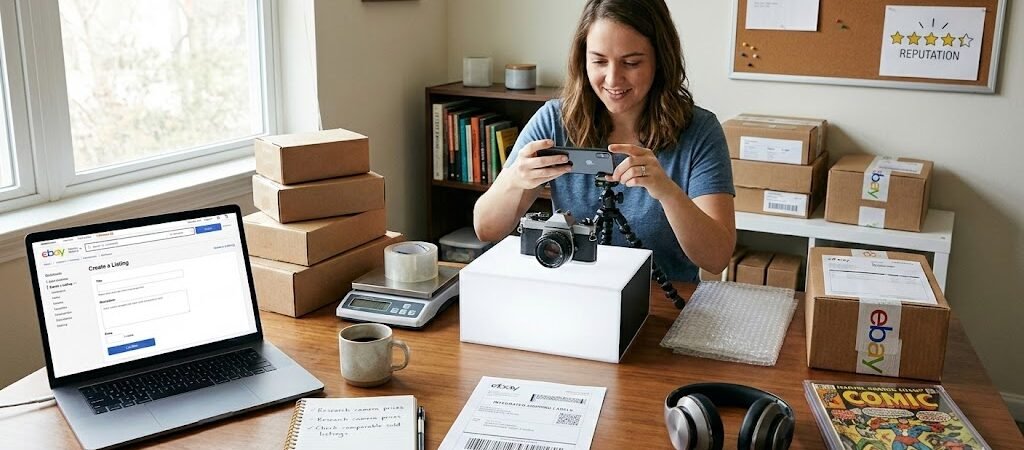
Starting your eBay selling journey can feel overwhelming, but with the right approach, it’s simple to set up, list items, and make your first sales. Here’s a beginner-friendly guide to get you moving.
1. Set Up Your eBay Account
Before you sell, you need a solid foundation:
- Create a seller account: Use a personal or business account depending on your goals.
- Verify your information: Link a bank account and confirm identity to receive payments.
- Understand fees: eBay charges listing and final value fees—know them upfront to avoid surprises.
2. Choose What to Sell
Pick items that have demand and are easy to ship:
- Start small: Sell things you already own—like clothes, gadgets, or collectibles.
- Check demand: Use eBay’s “Sold Listings” filter to see what actually sells.
- Consider profit margins: Factor in fees, shipping, and packaging when pricing items.
3. Create Effective Listings
A good listing attracts buyers and builds trust:
- Write clear titles: Include brand, model, color, and size. Avoid unnecessary words.
- Add multiple photos: Show the item from different angles, including close-ups.
- Describe accurately: Mention condition, flaws, and unique features in a concise, readable format.
4. Price Smartly
Your pricing strategy can determine how fast an item sells:
- Research similar items: Check what others are charging for the same product.
- Choose auction or fixed price: Auctions can get higher bids for rare items; fixed price works well for common products.
- Offer deals or free shipping: Small perks can encourage buyers to choose your listing.
5. Ship Quickly and Safely
Reliable shipping keeps customers happy:
- Use tracking: Helps both you and the buyer monitor the package.
- Pack securely: Protect fragile items with bubble wrap or boxes.
- Communicate: Notify buyers when items are shipped and provide estimated delivery times.
6. Build Your Reputation
eBay relies heavily on seller feedback:
- Encourage reviews: Positive feedback builds credibility.
- Resolve issues professionally: Promptly address complaints or returns.
- Stay consistent: Regular, reliable sales help grow your reputation over time.
7. Keep Learning
Even beginners can benefit from ongoing improvement:
- Explore eBay’s Seller Hub: Access analytics, tips, and promotions.
- Watch competitors: Learn from top sellers in your category.
- Experiment: Test different titles, photos, and pricing strategies to see what works best.
With these simple steps, new eBay sellers can confidently list items, attract buyers, and build a solid foundation for long-term success. Remember: start small, be consistent, and focus on delivering a great buyer experience.